What My Father Wanted Before He Wanted Us to Succeed
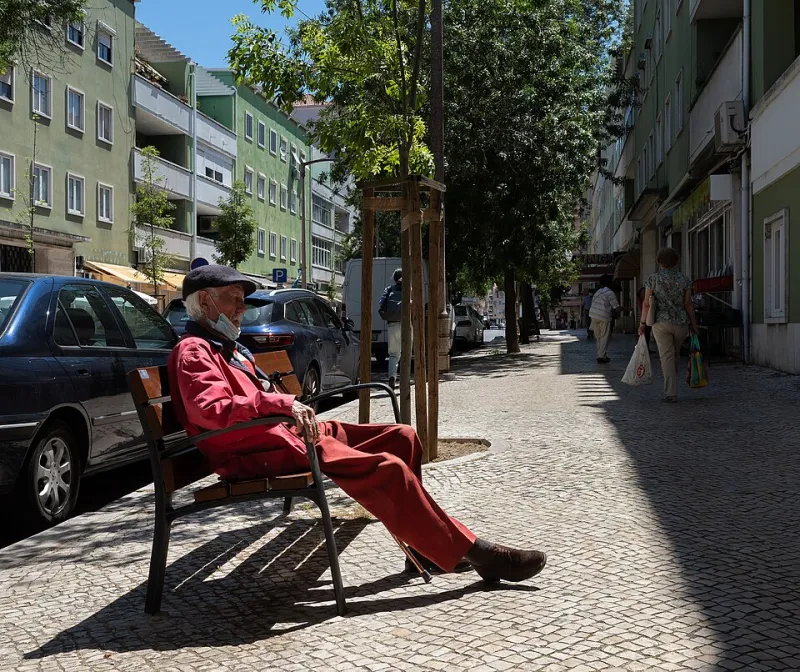
Photo: Jules Verne Times Two, CC BY-SA 4.0, via Wikimedia Commons
My father used to hum when he cooked. Not songs I recognized — something half-formed, like a melody that had lost its words somewhere along the way. I was maybe twelve when I finally asked him what it was. He shrugged, smiled with his eyes, and said, Không biết nữa. I don't know anymore.
I didn't think much of it then. I do now.
For a lot of Vietnamese American kids who grew up watching their parents work double shifts, take English night classes, and swallow whatever pride the day had cost them — the idea that our parents had inner lives can feel almost radical. We knew them as providers, as disciplinarians, as people who measured love in tuition payments and full refrigerators. But as dreams? As people who once imagined a different version of themselves? That was territory we were never really invited into.
The Language of Sacrifice Has No Word for Regret
There's a concept that floats through a lot of Vietnamese households — it doesn't always get named out loud, but you feel it. Hy sinh. Sacrifice. It's not presented as a loss. It's presented as the point. You give things up because that's what you do when you love people who need you.
For Vietnamese immigrants who arrived in the U.S. with nothing but the clothes they carried and whatever documents they could protect, this wasn't philosophy — it was survival strategy. There was no space to mourn an abandoned career or a creative passion left behind. You moved forward because stopping meant falling.
But here's the thing about a sacrifice made in silence: the person receiving it doesn't always know what they've been given.
Lan, 34, grew up in San Jose and spent most of her childhood assuming her mother had always wanted to be a seamstress. It wasn't until her mother's retirement party — organized by Lan and her siblings — that a family friend mentioned offhandedly that her mother had been accepted to a university in Saigon the year she fled Vietnam. She had wanted to study literature.
"I just stood there," Lan told me. "I didn't know what to do with that information. She never said a word. Not once."
Why the Silence Feels Like Love
It would be easy to frame this as repression — as parents too emotionally closed off to share themselves with their children. But that reading misses something important about the cultural logic at work.
In many Vietnamese families, talking about your own desires is considered a kind of selfishness. The self is meant to be subordinated to the family unit, especially in moments of crisis. When you've survived war, displacement, and the grinding uncertainty of immigration, broadcasting your personal disappointments can feel like an indulgence you simply cannot afford.
There's also something protective in the silence. Several adult children I spoke with described parents who seemed to shield them from the full weight of what had been given up — as if knowing might create guilt, and guilt might distract from the very future the sacrifice was meant to build.
Tuấn, 41, a software engineer in Austin, spent years thinking his father's decision to leave a career in architecture in Vietnam was simply practical. "He always said there was no future in it here. No connections, no credentials that transferred." It was only after his father passed away that Tuấn found a box of drafting sketches — careful, detailed, dated across twenty years — hidden in the back of a closet. "He never stopped," Tuấn said quietly. "He just never showed us."
The Cost of an Unlived Life
There's a generational reckoning happening right now in Vietnamese American communities. Children who grew up under the pressure of their parents' sacrifices are now adults — and some of them are starting to ask uncomfortable questions.
Not just what did you give up, but what did that cost you? And more painfully: what did it cost us, not knowing?
Psychologists who work with immigrant families point to something called "intergenerational ambivalence" — the complicated mix of gratitude and grief that second-generation children feel when they begin to understand the full scope of what their parents carried. It's not resentment, exactly. It's more like mourning a closeness that was never quite allowed to exist.
Because when parents don't share their inner lives, children don't just lose access to their parents' stories. They lose a model for how to have an inner life at all. Some of the Vietnamese Americans I spoke with described growing up feeling like their own dreams were somehow frivolous — because they'd never seen an adult in their household treat a personal desire as something worth protecting.
Starting the Conversation Late Is Still Starting It
The good news — and there is good news — is that some of these conversations are finally happening. Haltingly, awkwardly, sometimes through tears or long silences, adult children and aging parents are finding ways to talk about the unlived lives that shaped everything.
Lan eventually sat down with her mother and asked about the university acceptance, about the literature degree that never happened. Her mother was quiet for a long time. Then she said, "I used to think about it. But you and your brother needed me to think about other things."
It wasn't a breakthrough. It wasn't a tearful unburdening. But it was something — a small crack in a wall that had stood for decades.
My father still hums when he cooks. I still don't always know the songs. But I've started asking differently now — not just what is that, but where did you learn it, what does it remind you of, what were you like before you became my father?
Sometimes he answers. Sometimes he just smiles and turns back to the stove.
But at least now I know to ask.