Songs Nobody Else Hears: The Private Soundtracks of Vietnamese American Lives
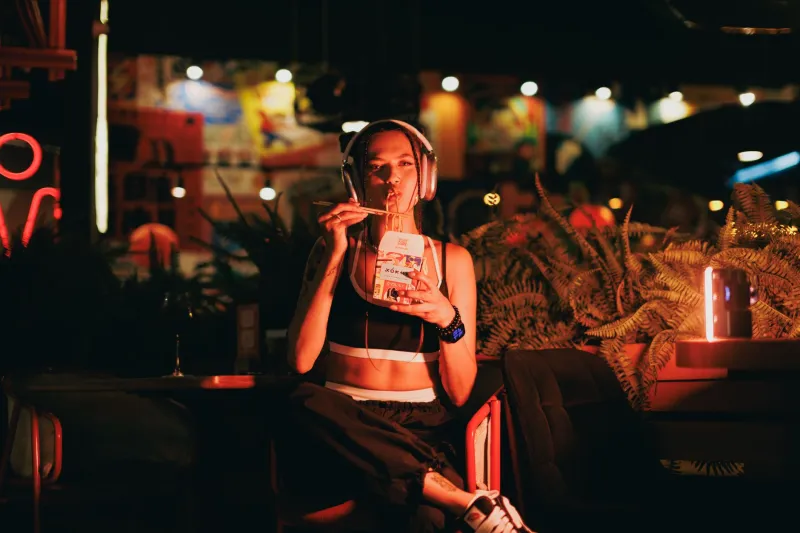
There's a playlist most Vietnamese Americans never share — the one they return to when the day gets heavy and the words won't come. It lives in headphones and late-night car rides, stitched together from V-pop ballads, lo-fi beats, and rap verses that somehow say everything their families never could.
My cousin keeps hers on a private Spotify account under a fake name. She's 24, born in San Jose, and she says she'd rather explain a tattoo to her parents than explain why she has Sơn Tùng M-TP queued up next to Mitski and a Saigon rapper named Suboi. "It's just — it's mine," she told me. "It's the only space where I don't have to translate myself."
That feeling? A lot of us know it.
The Music That Travels Without a Visa
For Vietnamese Americans who grew up between two cultures, music has always done a particular kind of heavy lifting. Language can fail you. Food can comfort you. But music — music gets into the body before the brain has a chance to argue with it.
Spotify's own data has shown that diaspora listeners often build what researchers call "hybrid playlists" — streams that bounce between the music of their heritage country and whatever genre reflects where they actually live. For Vietnamese Americans, that might mean a Trịnh Công Sơn classic bleeding into a Frank Ocean interlude, then landing on a track from Thuy, the Seattle-born Vietnamese American singer who's been quietly building one of the most emotionally honest catalogs in indie R&B.
Thuy — who goes by her Vietnamese name professionally — has talked openly about writing music for the version of herself that felt invisible. "I wanted to make songs for the girl who didn't see herself anywhere," she said in a 2022 interview. That girl, it turns out, is everywhere.
What the Shuffle Reveals
Ask a Vietnamese American millennial to show you their most-played songs and watch what happens. There's usually a pause. Maybe a small laugh. Then a kind of careful selection — the public playlist, the curated one, the one that's safe to share at a party.
The real one stays hidden.
Khôi, a 31-year-old in Houston, describes his as "the playlist I listen to when I'm driving home from my parents' house." It's heavy on bolero — the slow, aching Vietnamese ballad style his mother played constantly when he was growing up — but layered in with alternative hip-hop and a handful of tracks by 1975. "Bolero makes me feel the sadness without having to name it," he says. "And then the other stuff reminds me that I'm also just a regular American dude who grew up watching MTV."
That duality isn't confusion. It's actually a pretty sophisticated emotional vocabulary — one that took years to build.
V-Pop and the Pull of Something Familiar
V-pop — Vietnam's contemporary pop scene — has exploded in the last decade, and its reach into Vietnamese American households has been significant. Artists like MONO, Tlinh, and the ever-present Sơn Tùng M-TP have massive followings among second-generation listeners who may not speak fluent Vietnamese but still feel the pull of something familiar in the melodies.
There's a word in Vietnamese — nhớ — that means something between "to miss" and "to remember." It's used for people, for places, for times that are gone. V-pop is saturated with nhớ, and for Vietnamese Americans who grew up watching their parents carry it like a second skin, hearing it in a pop song can feel like finally being handed a map to a country you were always from but never quite lived in.
Lan, a 27-year-old graphic designer in Los Angeles, puts it plainly: "I don't always understand the lyrics. But I understand the feeling. And that's kind of the point, right? It's like — I belong to this thing even if I can't fully explain it."
When Hip-Hop Became the Translation Layer
Not everyone went looking for belonging in Vietnamese music. For a whole generation of Vietnamese American kids who grew up in the '90s and 2000s, hip-hop was the first language that felt honest about being an outsider.
Rap, with its emphasis on storytelling, code-switching, and the performance of identity under pressure, resonated deeply with kids who were doing exactly that every single day — at school, at home, at the dinner table where nobody talked about anything real.
Vietnamese American rappers like Khi$t, Cali rappers who namechecked Little Saigon in their verses, and later a wave of underground artists who rapped explicitly about the immigrant experience — these voices filled a gap. They said: your story is worth telling. Your neighborhood matters. The pressure you're under is real.
For many listeners, those songs were the first time they heard their own life reflected back at them with any kind of dignity.
The Gap Between Generations, Measured in Decibels
Here's the thing about music and Vietnamese American identity that doesn't get talked about enough: the gap it represents isn't just cultural. It's emotional.
Parents who came over as refugees or immigrants often processed their grief and displacement in silence. They survived by not looking back, by keeping their pain locked somewhere private. Their kids grew up in that silence — absorbing it, inheriting it, not quite understanding where the heaviness came from.
Music became a way to feel things that had no family precedent. To grieve losses that weren't technically yours. To celebrate a joy that felt almost guilty.
Ngọc, a therapist in the Bay Area who works primarily with second-generation Vietnamese Americans, says she regularly asks clients about their music. "What people listen to when they're alone tells you a lot about what they're actually carrying," she says. "I've had clients bring in a song and just — break open. Because the song said something they'd never had words for."
Building the Bridge, One Track at a Time
There's something quietly radical about a Vietnamese American kid in Minnesota building a playlist that moves from their grandmother's favorite cải lương opera singer to a Hozier track to a Suboi verse and back again. It's not confusion. It's cartography — mapping a self that exists in multiple places at once.
The musicians who understand this best are the ones making music specifically for that in-between space. Artists like Thuy, like the Vietnamese American indie folk duo Viet Cong (who later changed their name to Preoccupations), like the growing number of producers and singers who refuse to choose between their heritage and their present — they're building the bridge in real time.
And for every Vietnamese American who keeps their real playlist hidden under a fake name, there's a song out there waiting to be heard — one that says you don't have to translate yourself here. This sound already knows you.
Maybe that's what music has always been, for all of us navigating the long journey between who we were raised to be and who we're still becoming. A language without a border. A home that fits in your headphones.
Hành trình tôi — my journey. Sometimes it sounds like bolero. Sometimes it sounds like a rap verse over a lo-fi beat at 2 a.m. Usually, it sounds like both.