Between Two Worlds, They Made a Third: Vietnamese American Artists Rewriting the Rules
My cousin called it "playing around." My aunt called it a phase. My grandmother didn't have a word for it in Vietnamese, which maybe says everything.
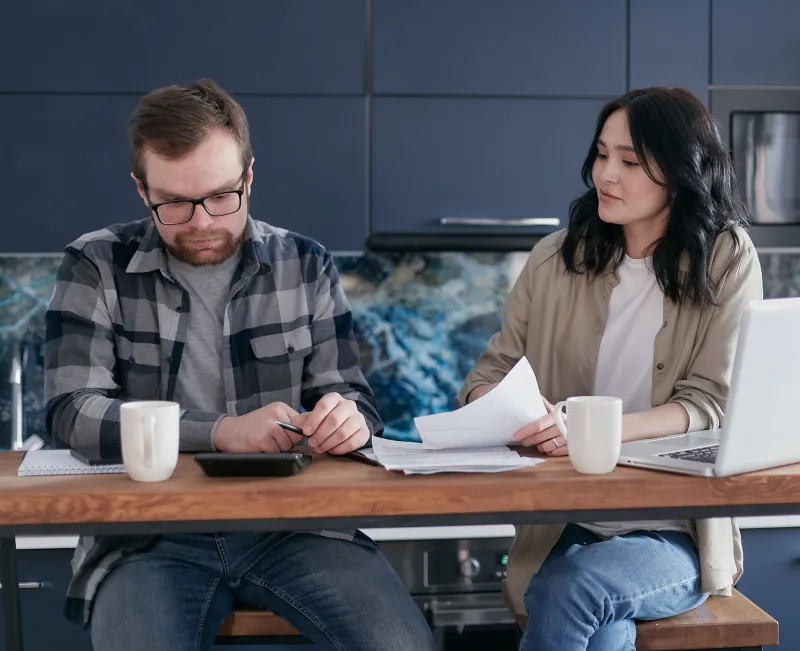
For a lot of Vietnamese American kids who grew up in places like Garden Grove, San Jose, or Houston's Midtown, the script was pretty clear: school, a stable career, a house before forty. Art wasn't on the list. Not as a real thing, anyway. You could appreciate it. You could hang something pretty on the wall. But making it your life? That required a level of explanation most family dinner tables weren't ready for.
And yet — here they are. A generation of Vietnamese American artists who made the leap anyway, and who are creating work that nobody, not their parents, not their grandparents, not even the broader American art world, quite expected.
The Sound Between Generations
Take producers like those coming out of the Little Saigon music scene in Orange County. On the surface, their beats might sound like any other contemporary hip-hop or R&B production. But dig a little deeper and you'll catch it — a sample from a cải lương recording, the pluck of a đàn tranh looped into something hypnotic, a lyric dropped in Vietnamese right when you least expect it.
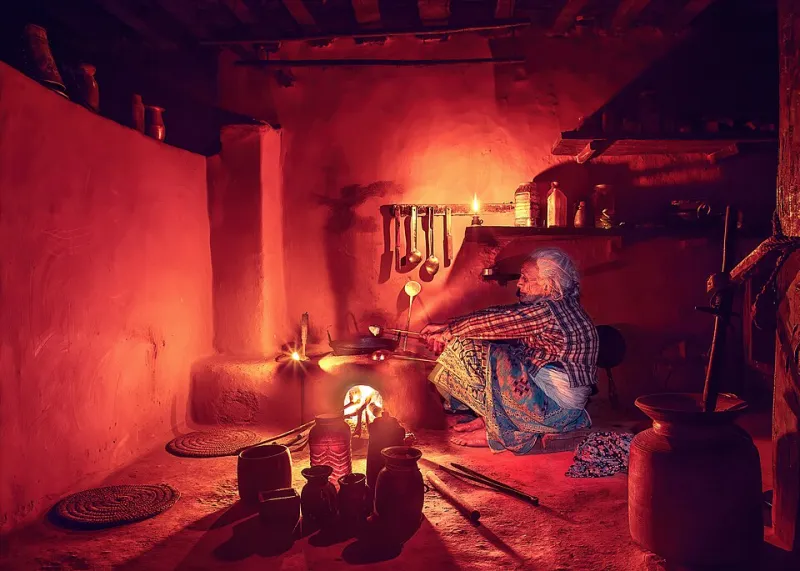
For many of these producers, the blending wasn't always intentional. It started as something private. A way to process growing up between two soundtracks — the Vietnamese cassette tapes their parents played on road trips and the radio stations their classmates were listening to. Eventually, the two sounds stopped feeling like opposites.
"I used to think I had to choose," one producer from San Jose told me. "Like, either I was making Vietnamese music or American music. It took me a while to realize that the mix was the music."
That shift — from either/or to both/and — is maybe the defining creative move of this generation.
Pixels and Phở: Digital Art That Speaks in Two Languages
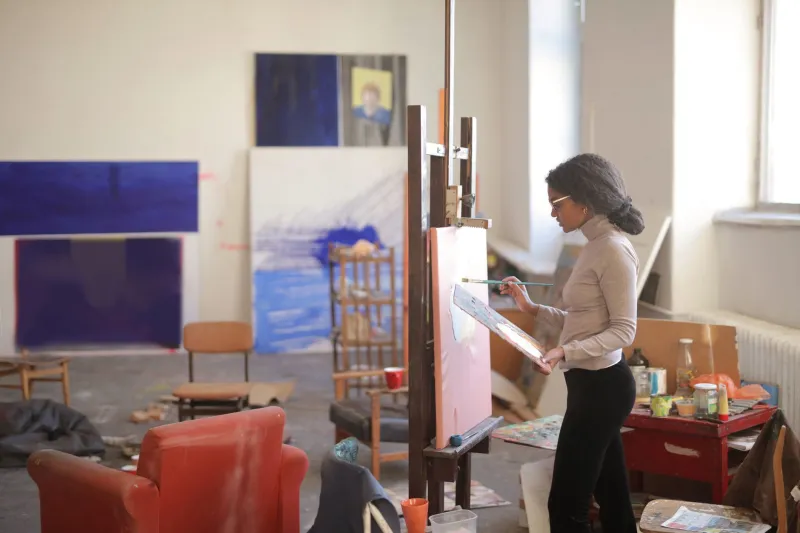
In the visual art world, Vietnamese American designers and digital artists are doing something similar. Across Instagram, on gallery walls in Los Angeles and New York, and in commercial work that's starting to reach mainstream brands, a distinct aesthetic is emerging. It pulls from the geometry of traditional Vietnamese embroidery, the color palettes of Tết decorations, the iconography of Buddhist altar art — and runs it through a thoroughly contemporary digital lens.
The results are striking. They feel familiar and foreign at the same time, which is, honestly, not a bad description of the Vietnamese American experience itself.
For the artists making this work, though, the path here wasn't always smooth. Many describe years of quietly pursuing their craft while presenting a different face to their families. Graphic design was acceptable because it sounded practical. Fine art was harder to sell. Performance art? That conversation often didn't happen at all.
"My parents thought I was doing marketing," laughs one visual artist based in Los Angeles, whose large-scale digital installations have been shown at galleries across the West Coast. "And I mean, technically, I did do some marketing work to pay rent. But the art was always the thing."
The Permission Nobody Gave Them
There's a particular kind of guilt that shows up in conversations with Vietnamese American artists, and it's worth naming directly. It's not exactly shame. It's more like a lingering awareness that the life they're living cost someone else something enormous.
Many of their parents came to the United States with very little. They worked jobs that had nothing to do with who they were or what they loved because survival came first. The idea that their children might choose uncertainty — might voluntarily step away from the stable path — can feel, to that older generation, almost incomprehensible.
"My dad worked double shifts at a restaurant for fifteen years," says a performance artist who now creates work that explores Vietnamese refugee memory through movement and spoken word. "And I'm up on a stage talking about feelings. I get why that's confusing to him."
But here's what's also true: some of these parents, given time, have come around. Not all of them. Not easily. But the artists who've found success — who've shown their families that the work is real, that people show up for it, that it pays something — have sometimes watched those initial dinner-table silences slowly soften into something that looks, from a certain angle, like pride.
"He came to my show last year," the same artist tells me. "He didn't say much. But he came."
In Vietnamese American families, sometimes that's the whole speech.
What They're Actually Making
It would be a mistake to reduce this generation's work to the story of family conflict. Because the art itself — independent of how it got made — is genuinely remarkable.
Vietnamese American musicians are producing albums that chart on independent platforms and earn critical attention from publications that rarely cover Southeast Asian American artists. Digital illustrators are landing commissions with major American brands while simultaneously showing work in community galleries back in Little Saigon. Filmmakers are making short films about Vietnamese American life that travel to festivals, win awards, and get people in the audience crying in ways they didn't entirely expect.
The through line in all of it isn't nostalgia, exactly. It's more like translation. These artists grew up holding two sets of references simultaneously, and they've figured out how to make that double vision into something generative. The friction between their parents' world and their own isn't just something they survived — it's material.
A New Kind of Hành Trình
Hành trình means journey. And every journey, at some point, involves leaving something behind — not because it doesn't matter, but because the road ahead requires your full attention.
What's happening with Vietnamese American artists right now feels like exactly that kind of journey. They're not abandoning their roots. If anything, they're more engaged with Vietnamese culture than many of their peers who took the safer, more expected paths. But they're engaging with it on their own terms, through their own eyes, in forms that their grandparents couldn't have imagined and their parents sometimes still struggle to understand.
That's not a betrayal. That's what culture does when it's alive.
And if you ask the artists themselves — the ones who stayed up late making beats in their bedrooms, who filled sketchbooks they kept hidden, who finally said the thing out loud at the dinner table and braced for the silence — most of them will tell you the same thing.
They couldn't have made anything else. This was always the work.
They just needed time to say so.