Về Quê: What Vietnamese Americans Find When They Finally Go Back
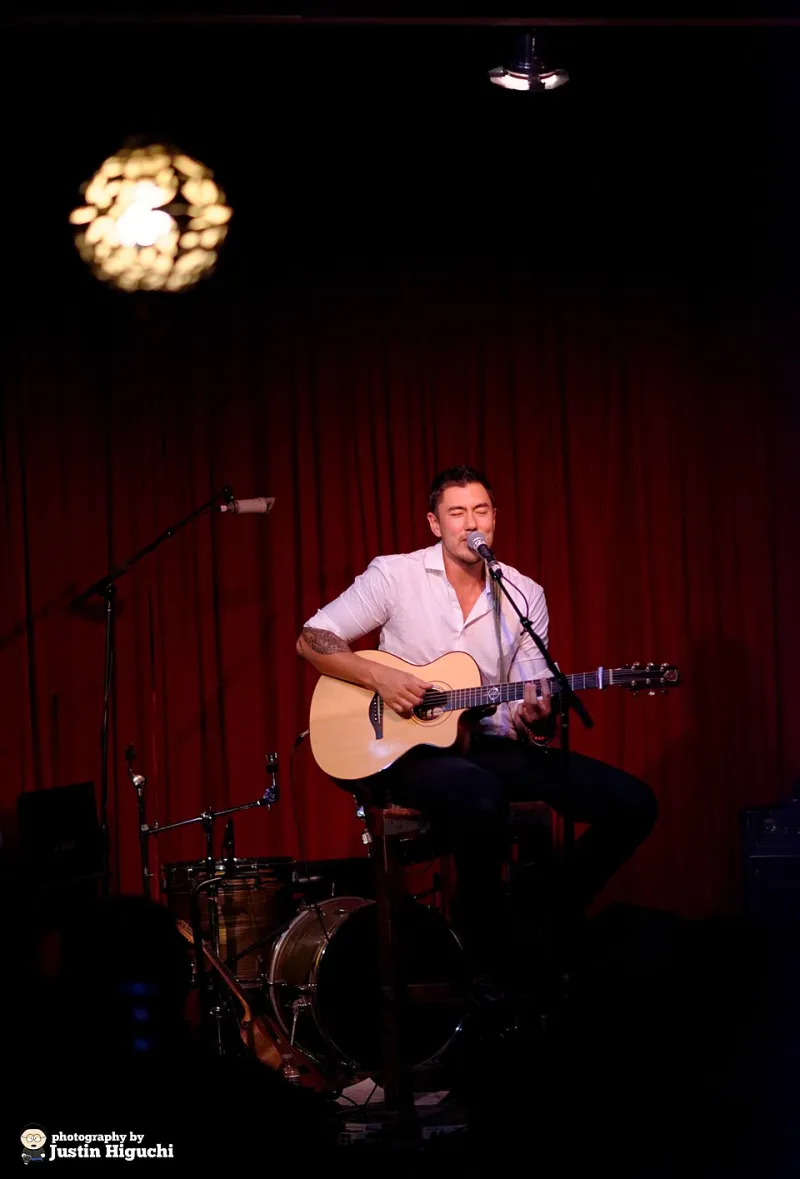
Photo: Justin Higuchi from Los Angeles, CA, USA, CC BY 2.0, via Wikimedia Commons
There's a Vietnamese phrase that doesn't translate cleanly into English: về quê. Literally, it means 'return to the countryside' or 'go back to the hometown.' But anyone who has heard a Vietnamese grandmother say it with a certain weight in her voice knows it carries something heavier—longing, rootedness, a pull that geography alone can't explain.
For the children and grandchildren of Vietnamese refugees and immigrants scattered across Houston, San Jose, New Orleans, and everywhere in between, về quê has started to mean something new. It means buying a plane ticket. Packing a phrase book. Showing up at a gate in a village your parents left before you were born, hoping someone recognizes your face.
This is happening more and more. And what these travelers are finding is complicated, beautiful, and nothing like what they expected.
The Urge to Go Back
My Nguyen, 29, grew up in Garden Grove, California—the heart of Little Saigon. Her parents fled Saigon in 1979 and never went back. For most of her childhood, Vietnam existed as a collection of smells from her mother's kitchen, fragments of war stories her dad would only half-tell, and a map on the wall that no one pointed at directly.
"I knew more about Vietnam from pho shops and bánh mì sandwiches than from my own family," she says. "There was this silence around the actual place. Like it was both everywhere and untouchable."
Two years ago, My booked a solo trip to her mother's home province of Bến Tre, in the Mekong Delta. She was terrified. She barely spoke Vietnamese beyond pleasantries. She didn't know what she was looking for.
What she found was a great-aunt who grabbed her hands and wept. A house with a mango tree her mother had mentioned exactly once. A language she'd spent her whole life hearing but suddenly needed to actually use.
"I cried at the airport on the way home," she says. "Not because I was sad to leave. Because I finally understood what my mom had lost."
More Than Roots Tourism
This trend has a name in academic circles—heritage tourism—but calling it that feels a little clinical for what's actually happening. These aren't guided tours or ancestry dot-com printouts. They're personal pilgrimages, often messy, often unplanned, and almost always emotionally disorienting.
Research from organizations like the Vietnamese American Arts & Letters Association (VAALA) and independent surveys of Vietnamese American communities suggest that second- and third-generation Vietnamese Americans are traveling to Vietnam at increasing rates, with a significant portion citing family history and identity exploration as the primary motivation—not just sightseeing.
Social media has accelerated this. On TikTok and Instagram, Vietnamese American creators are documenting their village visits in real time—standing in doorways of ancestral homes, eating dishes their grandmothers made, crying on camera in ways their parents' generation rarely allowed themselves to. The videos rack up millions of views. The comments are full of "this is my story too."
What They're Discovering—And What Challenges Them
Not every homecoming is soft-focus and emotional. Some Vietnamese Americans arrive expecting a village frozen in time and find instead a place that has moved on without them.
Khoa Tran, 34, from Atlanta, traveled to his grandfather's village in Nghệ An province last spring. He'd built up a mental image based on black-and-white photographs and his grandfather's stories. What he found was a town with karaoke bars, motorbike repair shops, and teenagers glued to their phones.
"It was modern. Of course it was—why wouldn't it be? But I had this weird grief about it," Khoa admits. "Like I was mourning a version of Vietnam that only exists in my family's memory. That's not their problem. That's mine."
This is one of the more uncomfortable truths these journeys surface: the Vietnam preserved in diaspora memory is often a place that no longer exists, or perhaps never existed quite the way it was remembered. The homeland has been changing, growing, healing, and evolving while the diaspora held it still in amber.
For many returnees, this collision between myth and reality becomes its own kind of gift. It forces a reckoning with identity that's less about finding definitive answers and more about sitting comfortably with the question.
Bridges, Not Gaps
What's perhaps most striking about these journeys is what they build—not just within individuals, but between generations.
Lan Pham, 26, from Dallas, brought her 68-year-old father back to Huế for the first time since he left as a teenager. She had organized the whole trip; he had agreed reluctantly, claiming he "didn't need to go back."
On the second day, she watched him stand in the courtyard of a temple he'd visited as a child and go completely quiet. He didn't cry. He just stood there for a long time.
"On the flight home, he started telling me things he'd never told me," Lan says. "About his childhood, his friends, the food he missed. It was like the place unlocked something in him. And now I feel like I actually know my dad."
That, more than any Instagram moment or heritage certificate, might be the real return. Not going back to a place, but going back to a person—and finding that the journey home was through them all along.
Carrying It Forward
The Vietnamese soul has always understood movement. From the ancient migrations that shaped Southeast Asia to the 20th century's brutal displacements, Vietnamese people have carried their culture in their bodies, their recipes, their language, their rituals. Hành trình—the journey—is not incidental to Vietnamese identity. It is central to it.
For Vietnamese Americans making these trips back to ancestral villages, the journey is doing what journeys have always done: reshaping the traveler. They return to the US changed, carrying something new—a great-aunt's phone number, a recipe written on a napkin, a photograph of a mango tree, a grief they can finally name.
They return, in some small way, more whole.
Have you made a trip back to your family's homeland? We'd love to hear your story. Share it with us at Hành Trình Tôi.