The Name They Kept from You: What Vietnamese Parents Hide in Plain Sight
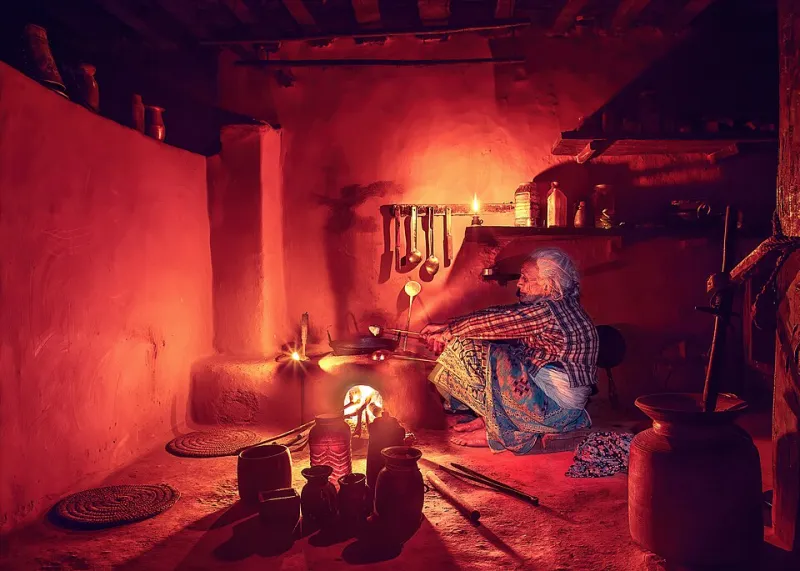
Photo: Original: Mithun Kunwar Derivative work: Radomianin, CC BY-SA 4.0, via Wikimedia Commons
My mother's name is Nguyễn Thị Bích Phượng. I did not learn this until I was nineteen years old, filling out a college financial aid form at the kitchen table while she stood behind me correcting my spelling.
She had always just been Mom. At school pickup, she was Mrs. Nguyen. At the nail salon she owned for eleven years in suburban Maryland, the laminated name tag by the register said simply: Linda.
Bích Phượng means jade phoenix. I had been living next to a jade phoenix my entire childhood and had no idea.
What's in a Vietnamese Name—and Why It Matters
In Vietnamese naming tradition, names are not casual. They are chosen the way you might choose a prayer. Each syllable carries meaning—virtues to aspire to, natural beauty to embody, hopes a parent holds for a child they haven't yet met. Bích suggests clarity, like polished jade. Phượng is the mythical phoenix bird, symbol of grace and resilience.
These are not decorative choices. They are declarations.
So when Vietnamese immigrants arrive in the United States and quietly shelve those names—adopting a Jennifer, a Kevin, a Linda—something more than a label changes. A whole architecture of meaning gets tucked away, sometimes permanently.
The question that haunts many second-generation Vietnamese Americans isn't just what was your name. It's why didn't you tell me.
Protection Dressed as Practicality
When you ask Vietnamese immigrant parents directly, the explanations are almost always practical. It was easier for people to pronounce. I didn't want you to be teased. Americans couldn't say it right anyway.
These reasons are real. They are also incomplete.
Linh Trần, 34, grew up in Houston knowing her mother only as "Mai"—a name simple enough that teachers could manage it without wincing. It wasn't until Linh's grandmother visited from Hà Nội that she overheard someone call her mother by her full name: Trần Ngọc Mai Hương. Four syllables. A whole identity.
"I felt cheated," Linh told me over the phone, laughing a little but not entirely. "Like there was this version of my mom that existed before me, that I was never introduced to."
Her mother's reasoning, when Linh eventually asked, was straightforward: I didn't want your teachers to roll their eyes before they even looked at you.
That's not practicality. That's grief dressed up as strategy.
The Calculus of Erasure
Immigrant parents—Vietnamese parents especially, given the particular brutality of what many of them fled—often make a quiet, devastating calculation when they arrive in America. They assess what they can afford to lose. Language is negotiable. Customs can be adapted. But opportunity, safety, belonging for their children—those are non-negotiable.
Names become collateral.
Dr. Mỹ Hương Lê, a Vietnamese American cultural psychologist based in San Jose who studies intergenerational identity among Southeast Asian families, describes this as "preemptive assimilation." Parents don't wait to be told their names are wrong. They erase them first, before anyone else gets the chance.
"There's a kind of armor in that," she explains. "If I simplify myself before you can mock me, you never get to hold that power over me. But the armor eventually becomes the wound."
What gets lost in that process isn't just phonetics. It's the story embedded in the name—the grandparent who chose it, the province it comes from, the era it belongs to. Strip that away, and you strip away a thread connecting a child to a history they were never given the chance to refuse.
When Children Go Looking
Something interesting is happening among Vietnamese Americans in their twenties and thirties right now. They're going looking.
On TikTok, Reddit threads, and in private Facebook groups for Vietnamese diaspora communities, you'll find post after post of young adults asking variations of the same question: Does anyone know how to find out their parent's real Vietnamese name? The responses are always long, always personal, always a little raw.
For some, the search is genealogical—a practical need to fill in paperwork for immigration cases or family trees. But for many others, it's something harder to articulate. A reaching. A wanting to know who their parents were before the airport, before the ESL classes, before the American nickname became the only name anyone used.
Tuấn Phạm, 27, a graphic designer in Los Angeles, spent three months trying to track down his father's birth name after his father passed away unexpectedly. His father had gone by "Tony" since the late 1980s. Tuấn found the original name—Phạm Quốc Tuấn, his father's full name, which he had quietly passed a syllable of to his son without ever explaining why.
"He gave me his name without telling me," Tuấn said. "I didn't know I was carrying a piece of him the whole time."
What Gets Gained in the Reinvention
It would be easy to frame this only as loss. But that's not the whole truth, either.
Some Vietnamese immigrants describe their American names not as erasure but as a second self—a persona that let them navigate a new world with less friction, that gave them agency in a situation where they had very little. Linda could open a bank account without spelling her name four times. Kevin could get a callback for a job interview. These are not small things.
And some children, when they finally learn their parents' full Vietnamese names, feel something unexpected: awe. The names are so beautiful. So intentional. So different from the flattened version they grew up with.
Linh, the woman from Houston, eventually had her mother's full name tattooed on her inner wrist—in Vietnamese script, the diacritical marks and all. Her mother cried when she saw it. Not because she was sad. Because someone had finally said: this part of you matters. This part of you is worth keeping.
Saying It Out Loud
If you are Vietnamese American and you don't know your parents' full birth names, ask. Ask now, while you can. Ask even if it feels awkward, even if they deflect, even if they laugh it off and say it doesn't matter.
It matters.
And if you are a Vietnamese immigrant parent reading this—maybe your child doesn't know yet that you were once a jade phoenix, a morning star, a bamboo stalk, a river that bends but doesn't break. Maybe you decided long ago that your American life required a lighter name to carry.
But your children are old enough now. They can hold the weight of the beautiful, complicated, impossible name someone once chose for you with all the hope they had.
Let them carry it with you.
My mother is Nguyễn Thị Bích Phượng. I say it every chance I get now, practicing the tones until I get them right. It takes me a moment. It's worth every second.