The Family Chat Never Sleeps—and Neither Does the Love
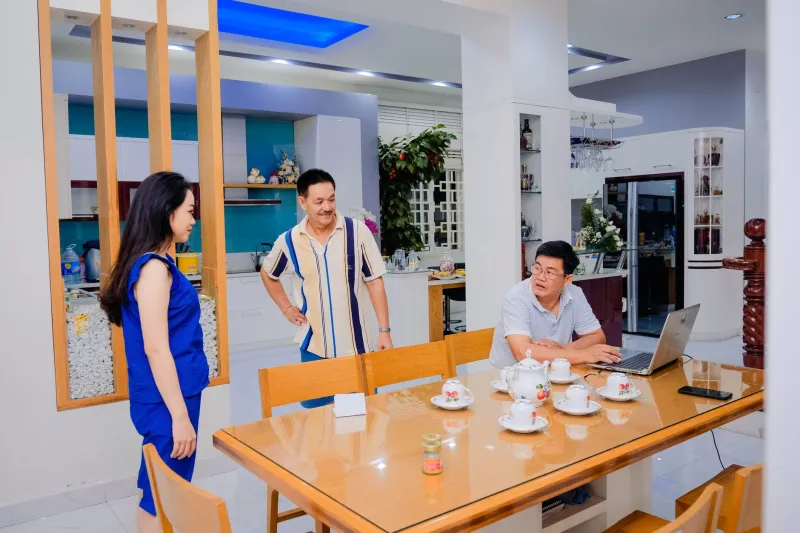
At 11:47 p.m. in California, a phone buzzes on a kitchen counter. In Houston, it is 1:47 a.m. In Virginia, 2:47 a.m. The group chat called Gia Đình Mình — Our Family — does not care about any of that. A cousin has posted a photo of a grocery shelf. An aunt has sent a three-minute voice note. Someone has reacted with a heart. Someone else has typed only: “Ok.”
For a lot of Vietnamese American families, this is where the family actually lives now. Not only in the dining room on Sundays, not only at Tết, not only on the group call that half the family forgets. The chat is a second living room, one with a read receipt, a mute button, and a search history that can take you back years.
A Living Room With a Read Receipt
The family chat is not just logistics, though it is also that. It is the place where someone asks whether the fish sauce on sale is the right brand, where a cousin posts a blurry photo of a wedding outfit, where an uncle sends a prayer emoji every morning at 6:15. It is where doctor appointments get translated, where storms get tracked, where a mother writes “Con ăn cơm chưa?” — have you eaten? — as if the answer could fix anything.
Voice notes are the heart of it. Typing in Vietnamese can be slow for younger relatives; typing in English can feel wrong for older ones. A voice message splits the difference. It carries accent, pauses, laughter, the sound of a kitchen. It also carries the thing Vietnamese families are often good at: saying five things at once without saying any of them directly.
The chat has its own etiquette. The aunt who sends 45-second voice notes. The cousin who replies only with stickers. The grandfather who has never typed a message but appears on every video call, nodding. The relative who leaves the group and is quietly added back. The person who sends “👍” and means “I have no idea what to say but I love you.”
The Invisible Jobs of Digital Kinship
Every family chat has workers. There is the translator, usually a younger cousin or daughter, who turns a hospital discharge note into a voice note and a voice note into a text. There is the mediator, who reads the tone of a message before anyone else sees it and decides whether to answer privately or let it sit. There is the memory keeper, who saves the photos. There is the person who goes silent.
That silence is part of the story, too. Not every Vietnamese American family chat is warm. Some are tense. Some are mostly announcements. Some are a place where old arguments wait under the surface, where a political post can start a week of quiet. Some people mute the thread because they are tired of being the family interpreter, or because they are grieving, or because they have jobs and children and no more emotional bandwidth for a 47-message debate about a cousin’s wedding seating.
The labor is real, and it is uneven. The person who translates also often absorbs. They explain the doctor’s instructions, then explain why Mom is worried, then explain why the worry is not an attack. They are not just bilingual. They are emotional infrastructure.
What the Emoji Can Say
Vietnamese family communication can be indirect, especially around love and worry. A parent may not say “I miss you.” They may ask if you have eaten. They may send a photo of fruit. They may comment on your weight. The chat does not magically fix that, but it gives everyone another language.
An emoji can soften a sentence that would be too sharp in text. A heart can land where “I’m proud of you” would get stuck. A crying-laughing face can admit that something is funny and painful at once. A prayer hands emoji can say “I’m thinking of you” without turning into a whole conversation about faith.
And a voice note can do something text cannot: it can preserve a person. After a relative dies, families often scroll back. There is the voice, still there, saying “Hello, everybody.” There is the laughter in the background. There is the ordinary message about parking. The chat becomes an archive no one planned to make.
Keeping the Thread Alive
The family chat will not replace the table. It cannot smell like phở or hold a grandmother’s hands. But it keeps the thread moving across states, time zones, and generations. It lets a family be ordinary together on a Tuesday.
Maybe the point is not to make the chat perfect. Maybe it is to notice who is doing the translating, who is being left on read, and who needs a direct message instead of a group reply. Maybe it is to send the voice note. Maybe it is to answer the grocery-store photo with the right brand.
At 11:47 p.m., the phone buzzes again. It is just a thumbs-up. It is also, in its own small way, someone saying: I’m here.