Dream Carefully: The Contradictions Vietnamese American Parents Teach Without Knowing It
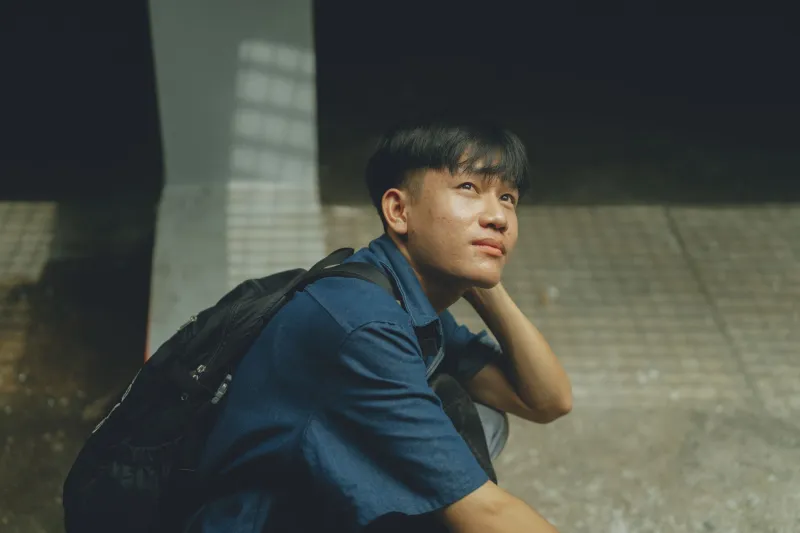
My friend Minh spent four years in pre-med before he told his parents he wanted to be a chef.
His mother's response, delivered in a mixture of Vietnamese and English that only gets deployed in moments of genuine crisis: "After everything we did for you, you want to cook?"
The thing is — his parents had been feeding him their own cooking his entire life. His mother's bò kho was a neighborhood legend. His father could debone a fish faster than anyone Minh had ever seen. Food was central to who they were as a family. And yet the idea of their son making food professionally, building a career in kitchens, was received as something close to a personal betrayal.
This is not a unique story. Ask around in Vietnamese American communities and you'll find a hundred variations of it.
The Framework Behind the Contradiction
To understand why Vietnamese American parents send such conflicting messages about ambition, you have to understand what they were working with when they made the rules.
Many Vietnamese immigrant parents — particularly those who arrived as refugees in the late 1970s and throughout the 1980s — built their understanding of success in America under conditions of profound instability. They arrived with nothing, or close to it. They watched neighbors lose businesses. They watched the economy swing in directions they couldn't predict or control. They learned, viscerally, that the only reliable protection against catastrophe was a credential that couldn't be taken away.
Doctor. Lawyer. Engineer. Pharmacist. These weren't arbitrary preferences. They were survival logic, encoded into parenting.
Unconventional paths — art, entrepreneurship, the culinary world, anything in the humanities — looked, from inside that framework, like voluntarily walking toward the cliff your parents had spent their entire lives running from.
Push Hard, But Only This Way
The paradox is that Vietnamese American parents are, in many ways, incredibly ambitious on behalf of their children. They sacrifice enormous amounts — financially, emotionally, in terms of their own opportunities — to give their kids every advantage. They push hard.
But the pushing has a shape. It's directed. It flows through specific channels that have been pre-approved by a calculus that prioritizes stability over fulfillment, security over passion.
This creates a strange double bind for the children raised inside it. You are expected to be driven, disciplined, high-achieving. But you are also expected to channel all of that drive toward a predetermined set of outcomes. Ambition, yes — but only the approved kind.
What happens to the kid who is genuinely, deeply ambitious about something outside those parameters? They face a choice that shouldn't be a choice: pursue what you actually want, or keep the peace.
Trauma as Policy
It's worth saying directly: this isn't a character flaw in Vietnamese American parents. It's a trauma response that got institutionalized into family culture.
When you have watched everything you built disappear — when you have experienced firsthand what it means to have no safety net, no fallback, no country that owes you anything — you develop a different relationship to risk than someone who grew up with stability. The risk tolerance of Vietnamese immigrant parents is calibrated to a set of experiences most of their American-born children will never fully understand.
The problem is that trauma responses, however understandable in their origins, don't always produce good policy. The parent who survived by being risk-averse is applying that survival strategy to a child who is operating in an entirely different context, with different options, different safety nets, different odds.
The map they're using was drawn for a country that no longer exists, applied to a territory they've never been.
A Generation Renegotiating the Terms
What's shifting now — slowly, imperfectly, with a lot of uncomfortable dinner table conversations along the way — is that a new generation of Vietnamese Americans is pushing back on the inherited framework.
Not by rejecting their parents' values wholesale. Most of them still believe in hard work, in family, in not taking shortcuts. But they're questioning the specific destinations those values were supposed to lead to. They're asking whether security and passion are actually mutually exclusive, or whether that was always a false choice.
They're also, crucially, achieving things that make the argument harder to dismiss. Vietnamese American chefs are earning Michelin stars. Vietnamese American writers are winning major awards. Vietnamese American musicians, filmmakers, designers, and entrepreneurs are building careers that their parents couldn't have imagined because those careers barely existed when the parents were forming their worldview.
Success, it turns out, is available in more shapes than the original blueprint allowed for.
The Conversation Nobody Wants to Have
Here's the hard part: even when the unconventional path works out, the emotional residue of the original conflict doesn't always dissolve.
Minh is a chef now, a good one, working in a kitchen he's proud of. His parents have eaten his food. His mother has, on more than one occasion, asked him how he makes certain things. There is a kind of quiet pride there that wasn't available four years ago.
But he told me that there are still moments — when he's exhausted after a long service, when something doesn't go the way he planned — where the old voice surfaces. You should have been a doctor. This is what you chose instead.
That voice isn't his. He knows it isn't his. But it was installed early and it runs deep.
The work of this generation isn't just to pursue different dreams than their parents imagined. It's to learn, over time, to trust their own judgment about what those dreams are worth. To hold their parents' fear with compassion while refusing to let it become the ceiling of their own lives.
That is its own kind of ambition. And it might be the most Vietnamese thing about them.