When the Child Becomes the Healer: Vietnamese Americans Carrying Their Parents' Unspoken Pain
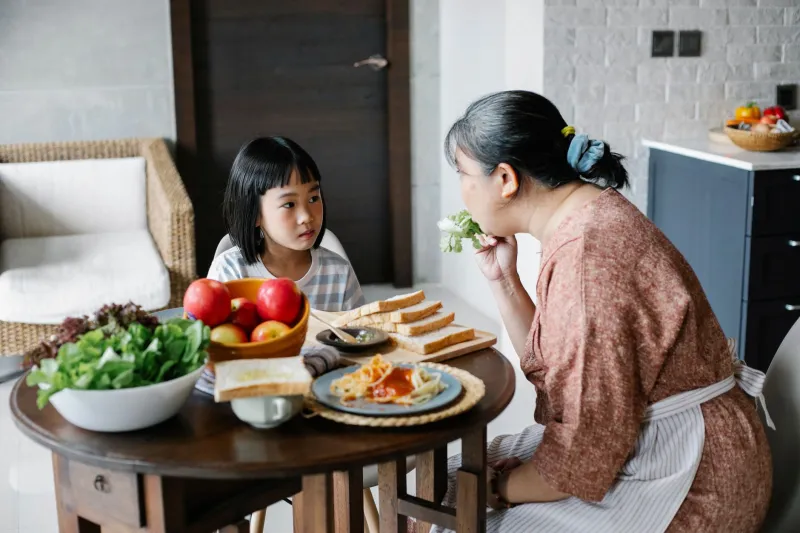
Lan Nguyen was 27 years old the first time her mother cried in front of her. Not the quiet, turn-away kind of crying. The kind that shakes your shoulders. They were sitting at the kitchen table in San Jose, the same table where Lan had done homework for twelve years, where her mother had served bowls of cháo without ever sitting down to eat one herself. And suddenly, between sips of tea, her mother started talking about a brother she'd lost crossing the South China Sea in 1979.
Lan didn't say anything. She just listened. She'd been doing it her whole life without realizing it had a name.
"I didn't know it was therapy," she told me later. "I just thought it was Tuesday."
The Role Nobody Assigned, But Everyone Seems to Have
Across Vietnamese American communities in cities like Houston, Orange County, and Falls Church, Virginia, a quiet phenomenon is playing out in living rooms and over phone calls and during long drives to doctor's appointments. Adult children — millennials and Gen Z especially — are stepping into an emotional role that has no official title. Call it the family therapist. The grief translator. The one who finally asked the question nobody else dared to.
Therapists who work with Vietnamese American clients say they hear versions of this story constantly. A daughter starts gently probing her father about his time in a re-education camp after years of total silence on the subject. A son realizes that his mother's explosive anger isn't really about the dishes — it's about a decade of loss she never processed. A young woman starts journaling her grandmother's stories because she's terrified they'll disappear when the old woman does.
This isn't accidental. It's a generational response to a very specific kind of silence.
What Silence Actually Costs
For many Vietnamese refugees and immigrants who arrived in the U.S. after 1975, emotional expression was not a luxury they could afford. Survival demanded a kind of psychological compartmentalization — you kept moving, you worked, you rebuilt. Grief was not a room you went into. It was a door you nailed shut.
The problem is that doors like that don't stay shut forever. They leak. The trauma seeps into family dynamics, into parenting styles, into the way love gets expressed — or doesn't. Children grow up in households where something heavy is always present but never named. They learn to read the room before they learn to read books.
Dr. Thuy Bui, a clinical psychologist based in Los Angeles who specializes in intergenerational trauma, puts it plainly: "These children became emotionally fluent in a language their parents never taught them. They had to, just to navigate daily life. But fluency comes with a cost."
That cost is real. Chronic stress. Anxiety. A tendency to prioritize everyone else's emotional needs over your own. Therapists have a term for it — parentification — but in Vietnamese American families, it often goes unrecognized because it looks so much like filial piety, like respect, like love.
The Questions That Changed Everything
What's shifting now is that a new generation isn't just absorbing their parents' pain — they're actively, intentionally trying to help process it. And they're doing it with tools their parents never had access to: therapy culture, emotional vocabulary, the simple but radical idea that feelings deserve to be spoken out loud.
Michael Tran, 31, grew up in a Vietnamese household in Dallas where his father's war stories existed only in fragments — a detail here, a name there, nothing connected. When Michael started seeing a therapist himself in his late twenties, he began to recognize the patterns. He started asking his father different questions. Not "what happened to you" but "how did that feel" and "what do you wish had been different."
"He didn't know how to answer at first," Michael said. "He'd deflect or change the subject. But I kept asking, visit after visit, year after year. And slowly, he started talking."
What Michael's father shared over the next two years filled in gaps Michael hadn't even known existed. It also, unexpectedly, healed something in both of them.
The Weight of Holding Someone Else's Story
But let's be honest about what this costs the child-turned-healer. It is not a small thing to hold a parent's grief. It is not a small thing to sit across from the person who was supposed to protect you and realize they are the one who needs protecting now. There's a complicated grief in that moment — a mourning for the childhood you thought you had, a tenderness for the parent you're finally seeing clearly.
Many Vietnamese American millennials describe feeling caught between two impulses: the deep desire to help, and the exhaustion of always being the one who bridges the gap. They're doing emotional labor that trained therapists get paid to do, and they're doing it with none of the professional distance.
"I love my mom. I want her to heal," said Jenny Pham, a 29-year-old in Seattle whose mother fled Vietnam as a teenager. "But sometimes after a long call where she's cried and I've listened and I've held her through it — I hang up and I just stare at the ceiling. Because who holds me?"
It's a question worth sitting with.
Breaking the Cycle Without Breaking the Bond
What's remarkable about this generation is that they seem to understand, instinctively, that healing their parents isn't the same as taking responsibility for their parents' pain. The best of them are learning to set limits — to show up with love and still say "I need a break." To ask the hard questions without making themselves the answer.
Some are doing it through creative work — documenting their parents' stories in essays, podcasts, and short films. Others are bringing their parents into their own therapy sessions, sometimes for the first time in anyone's life. A few have started community groups, informal circles where Vietnamese American adults can talk about exactly this dynamic with people who understand it from the inside.
The Vietnamese concept of tình cảm — a deep emotional attunement, a kind of relational warmth — was never meant to be one-directional. What this generation is doing, perhaps, is finally making it flow both ways.
The Unexpected Gift in All of It
For all the weight it carries, there is something that adult children in this role describe again and again: wisdom. An emotional depth that comes from having sat with hard stories. A capacity for empathy that is, in some ways, extraordinary.
Lan, the woman from San Jose, said something that stayed with me long after our conversation ended. "I used to think my mother's silence was a wall between us," she said. "Now I think it was a door she was waiting for someone to open. I just happened to be the one who knocked."
There's a journey in that — hành trình in the truest sense — not across oceans, but across the distance between two people who love each other and are finally, slowly, learning how to say so.
And maybe that's enough. Maybe that's everything.