The Last Flight Back: What Happens When Vietnamese Americans Stop Returning
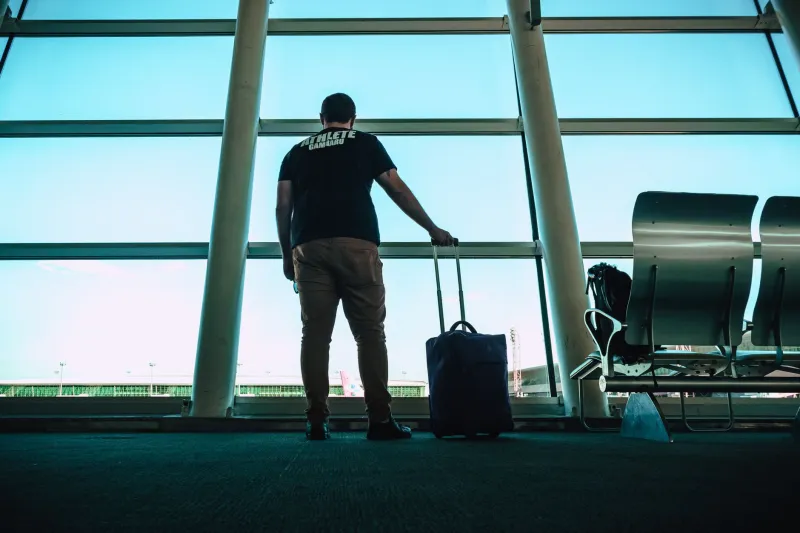
There's a specific kind of silence that settles in around the holidays when you've stopped going back. No frantic packing of suitcases stuffed with Advil, Ensure, and Costco vitamins. No 20-hour layovers in Seoul or Taipei. No mental rehearsal of which relatives will ask about your salary, your weight, or why you still aren't married.
Just stillness. And somewhere underneath it — something harder to name.
For a lot of Vietnamese Americans, the trip back to Vietnam isn't just a vacation. It's an obligation, an identity ritual, a way of proving you haven't forgotten where you came from. But quietly, without announcement, some people stop going. The flights get too expensive. The family dynamics get too exhausting. The Vietnam they remember stops matching the one they land in. And eventually, the annual pilgrimage simply... ends.
What nobody talks about is what comes after.
When the Cost Becomes More Than Money
Let's be honest about the financial reality first, because it matters. A round-trip ticket from Los Angeles or Houston to Ho Chi Minh City or Hanoi can easily run $1,200 to $1,800 — sometimes more during Tết season, when everyone is trying to go at the same time. For a family of four, that's a significant chunk of money. Add gifts for extended relatives, cash envelopes at every gathering, meals out, and the unspoken pressure to appear successful when you visit, and the trip can cost far more than the airfare suggests.
For Vietnamese Americans still building financial stability in the US, that math eventually stops working. And when it does, there's guilt — the particular guilt of knowing your grandmother is getting older and you're choosing your mortgage payment over another visit.
But money is rarely the only reason. It's often the most acceptable one to say out loud.
The Estrangement Nobody Named
Family estrangement in Vietnamese culture is a strange thing. It often doesn't look like estrangement at all on the surface. There are no dramatic confrontations, no formal announcements, no clear breaking point you can point to. Instead, it's a slow drift — phone calls that get shorter, visits that get less frequent, until one day you realize you've been emotionally absent from your Vietnamese family for years, even while technically maintaining contact.
For some Vietnamese Americans, returning to Vietnam means walking back into family dynamics that were never resolved. Old hierarchies. Relatives who made childhood difficult. The weight of being the American cousin — expected to be generous, expected to be grateful, expected to perform a version of success that justifies your parents' sacrifice.
At some point, the performance becomes too much. And staying home in California or Texas or Virginia starts to feel less like avoidance and more like self-preservation.
A Country That Kept Moving Without You
Here's something that catches a lot of people off guard the first time they go back after a long absence: Vietnam didn't wait for you.
The country has changed dramatically over the past two decades. Cities have expanded, skylines have shifted, entire neighborhoods have been torn down and rebuilt. The coffee shop your mother used to take you to is now a bubble tea chain. The street market your grandfather navigated by memory is now a parking garage. The Vietnam of your family's stories — the one preserved in photographs and holiday meals and the particular way your parents say certain words — that Vietnam exists mostly in memory now.
For some Vietnamese Americans, this discovery is liberating. Vietnam is a living, evolving place, not a museum of their parents' grief.
For others, it's quietly devastating. If the place you were returning to is already gone, what exactly were you going back for?
That question, once it surfaces, is hard to un-ask.
The Political Discomfort That Goes Unspoken
Not everyone feels comfortable naming this one, but it's real: for Vietnamese Americans whose families fled the communist government after 1975, returning to Vietnam can carry a specific political weight that never fully disappears.
For the first generation, it's complicated. Some refuse to go back entirely. Others go but feel a low hum of unease the entire time — a sense of moving carefully through a place where their family's history is officially on the wrong side of the story.
For the second generation, it's more ambiguous. They didn't live through 1975. They have genuine curiosity about Vietnam. But they also grew up in homes where certain things about the government were never said neutrally. And when they visit, they sometimes feel caught between their own open-minded curiosity and the inherited grief of their parents' generation.
At some point, some people decide the emotional navigation isn't worth it. Not because they hate Vietnam — but because every visit reopens something that doesn't have a clean resolution.
What It Means to Fully Land Here
There's a version of the Vietnamese American experience that keeps one foot permanently pointed toward Vietnam. The return trip is part of the identity — proof that you're still connected, still rooted, still honoring where your family came from.
But what about the people who eventually put both feet down here?
Stopping the annual trip back can feel, for some, like the final act of becoming American. Not in a flag-waving, assimilationist way — but in the quieter sense of committing to the life you've actually built. Letting your kids grow up rooted in this country without the constant reminder that home is somewhere else. Allowing yourself to grieve the Vietnam of your imagination and accept that your real life is here, in this city, in this house, with these people.
That's not betrayal. That's just a different kind of honoring.
The Guilt Doesn't Fully Go Away
But let's not wrap this up too neatly. Because the guilt — especially when a grandparent gets sick, when a parent grows older and the visits you didn't take start to feel irreversible — that guilt is real and it doesn't dissolve just because your reasons were valid.
Vietnamese Americans who've stopped going back often describe a low-level grief that surfaces at specific moments. When they smell a particular dish. When they hear a song their mother used to play. When they look at an old photograph and realize they can no longer picture the neighborhood it was taken in.
There is relief in the decision to stop going. And there is loss in it too. Both things are true.
Hành Trình Không Có Điểm Đến — A Journey Without a Fixed Destination
The name of this site — Hành Trình Tôi, my journey — leaves the destination open on purpose. A journey doesn't have to mean a return trip. It can mean moving forward into the life you're actually living, carrying what's worth carrying and releasing what's become too heavy.
For Vietnamese Americans who've stopped going back, the journey continues. It just looks different now. Less like a flight to Tân Sơn Nhất and more like figuring out what Vietnam means when it lives entirely inside you — in your cooking, your language, your values, your face — rather than on a map you keep flying back to.
Maybe that's its own kind of homecoming. Quieter. Closer. Entirely your own.